

Recycling NdFeB Magnets With Molten Salt Electrolysis Turns Waste Magnet Scrap Back Into Rare Earth Supply
Oct 24, 2026
Recycling NdFeB Magnets With Molten Salt Electrolysis Turns Waste Magnet Scrap Back Into Rare Earth Supply
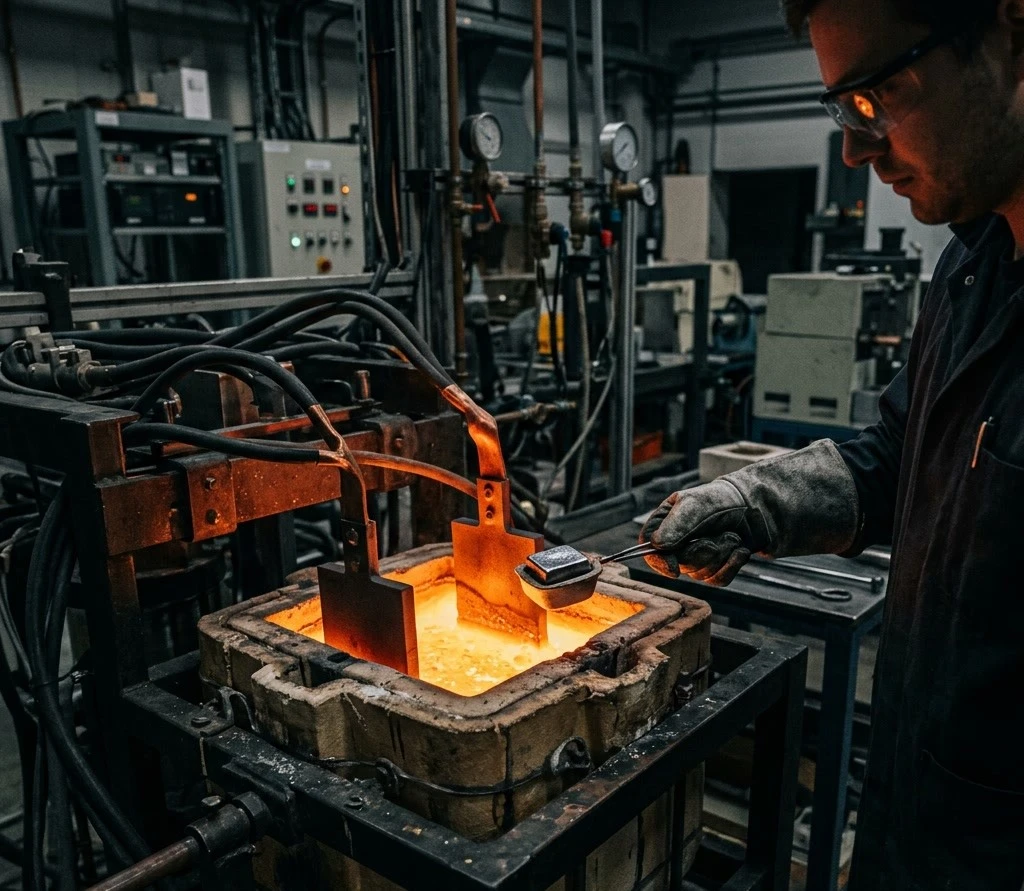
Most neodymium magnets today still start their life in a mine. A research team reported in Nature Communications this month that they may not have to. Their process takes crushed Neodymium (NdFeB) scrap and end-of-life magnets and recovers the rare earth content directly as metal, recycling Neodymium magnets with molten salt electrolysis and a consumable magnesium cathode.

Challenges of Conventional NdFeB Magnet Recycling
The usual practice is to demolish the magnets first: hydrogen decrepitation breaks the sintered body into powder, then acids dissolve the powder and the rare earths are precipitated as oxides. Those oxides then have to be re-reduced into metal before new magnets can be made. Two full conversion steps, heavy acid consumption, and a waste stream of salty water make the economics difficult, especially when neodymium and praseodymium prices sit at low levels.
How Molten Salt Electrolysis Recovers Rare Earth Metals
The new process skips the oxide stage. In a molten chloride salt bath, current passes between electrodes and the magnesium cathode captures Nd and Pr as an alloy. Because magnesium is consumed during the run, it acts as both the reducing agent and the electrode material. The authors report high recovery of the magnetic rare earths while iron and boron stay behind in the residue, which can be filtered off.
What this means for magnet buyers
What NdFeB Magnet Recycling Means for Rare Earth Supply
For a magnet factory, the value of such a route is not dramatic in a good year. It matters in a tight one. When export controls or shipping disruptions squeeze the supply of NdPr oxide, a working recycling channel acts as a buffer: wind turbine generators, elevator traction machines, air conditioner compressors and EV motors all retire on predictable schedules, and each tonne of scrapped magnets carries roughly one third of its weight in rare earths.
Quality Control and Future Prospects for Recycled NdFeB Magnets
One caution is worth repeating to purchasing teams. Recycled feedstock varies between batches, so magnets pressed from recovered material need the same grain alignment control, same testing and same salt spray verification as magnets made from virgin alloy. The sensible approach in the coming years is a mixed supply chain: primary metal for high grade and high temperature grades such as SH, UH and EH, with recycled input blended into standard N and M series where the property margins are wider.
We will keep watching how quickly this electrolysis route scales beyond the lab. If the energy cost per kilogram of recovered NdPr lands where the authors expect, magnet users in Europe and North America will have a domestic supply option that does not depend on opening a single new mine.


