




Neodymium Lens Magnets
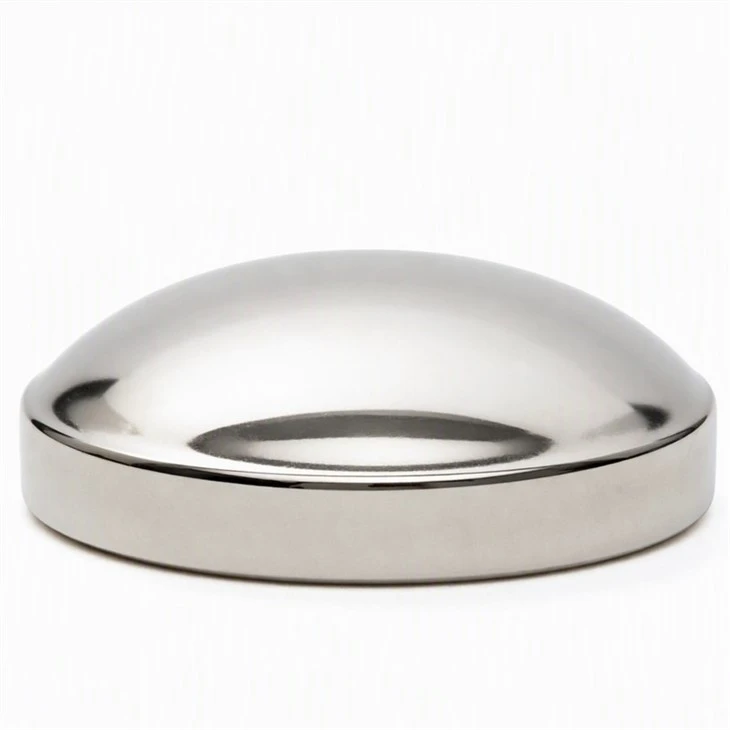
The Shape That Centres Itself A neodymium lens magnet is a disc of sintered Neodymium (NdFeB) with one face ground to a spherical cap. The part reads as a thick centre thinning to a ring edge. The dome is the working face. A flat disc needs its whole face aligned before it sits right. A lens...
The Shape That Centres Itself
A neodymium lens magnet is a disc of sintered Neodymium (NdFeB) with one face ground to a spherical cap. The part reads as a thick centre thinning to a ring edge. The dome is the working face. A flat disc needs its whole face aligned before it sits right. A lens magnet finds its own centre the moment it touches anything, because only the high point of the dome can carry the load.
Dimensions, Grades and Radius
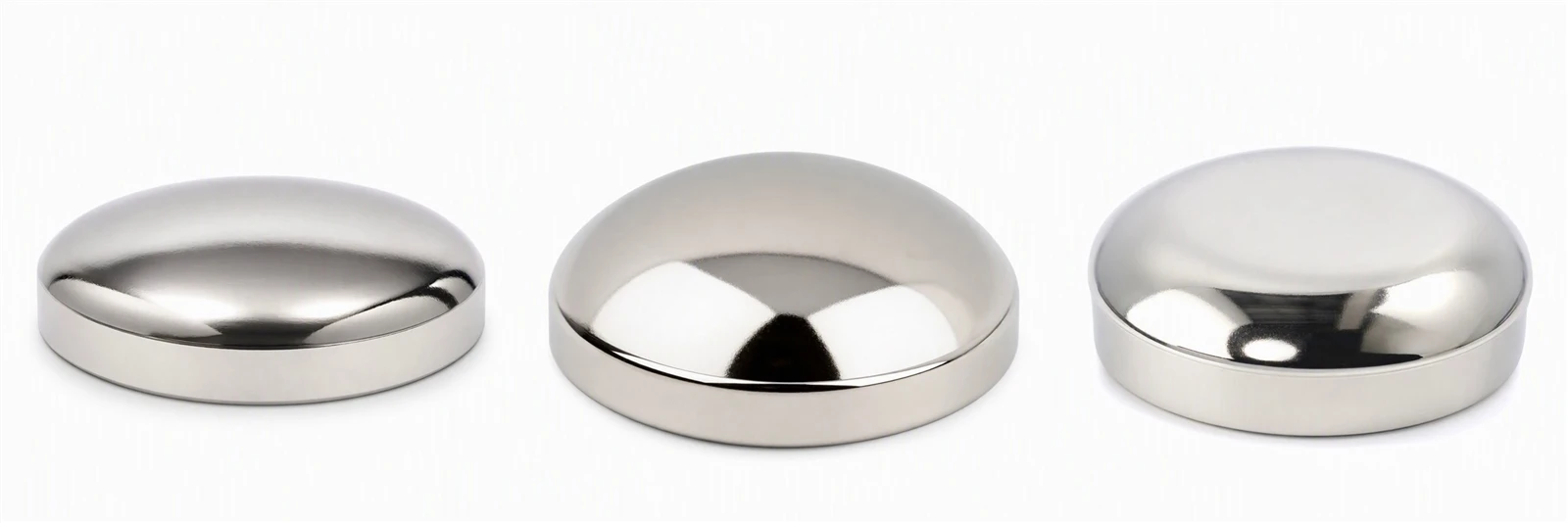
Sizes come as diameter, centre height and edge thickness. The table below lists the four we press and grind, with the weight of each piece. Material is N42 NdFeB as standard. N45 when the same dome has to reach further. The curve is a radius, not a guess. Tell us the radius and we grind to it.

Typical Applications
Sensor targets use lens magnets where the sensing point sits above the surface and a flat face would crowd it. Magnetic lamps and display fittings use the dome for one bright point of contact against a curved bracket. Jig work uses them as self-centring stops: a part drops onto the dome, rolls to the high point, and is located before the clamp moves. And in a classroom, iron filings on paper over a dome lay themselves into radial lines a flat disc never organises so neatly. That last one is the cheapest demonstration of a radial field anyone has found.

How the Dome Is Produced
The dome comes after the magnetising. A sintered blank is pressed, charged, then the cap is generated on a form grinder. The curve is where the nickel goes thin. Epoxy is the honest answer for anything damp. Tolerance holds to about ±0.1 mm on diameter and edge thickness. Charging is axial through the height as standard, and most buyers never ask about the radius until their second order.
Specifying Your Part
If the design calls for a neodymium lens magnet rather than another flat disc, send the diameter, the centre height and the dome radius, and we will confirm grade, coating and magnetising before quoting. Odd radii are ground to drawing.
Hot Tags: neodymium lens magnets, China neodymium lens magnets manufacturers, suppliers, factory, ball shaped neodymium sphere magnet, Bonded Neodymium Magnet, Neodymium Block Magnet, Neodymium Cylinder Magnet, Neodymium Cylinder Magnets, rare earth permanent magnet



Send Inquiry
